Now in its eighth edition, Appenninica MTB Stage Race has established itself as Italy’s flagship MTB stage race and one of the most respected events on the international calendar. But the event organized by ASD Happy Trail MTB is far more than a race.
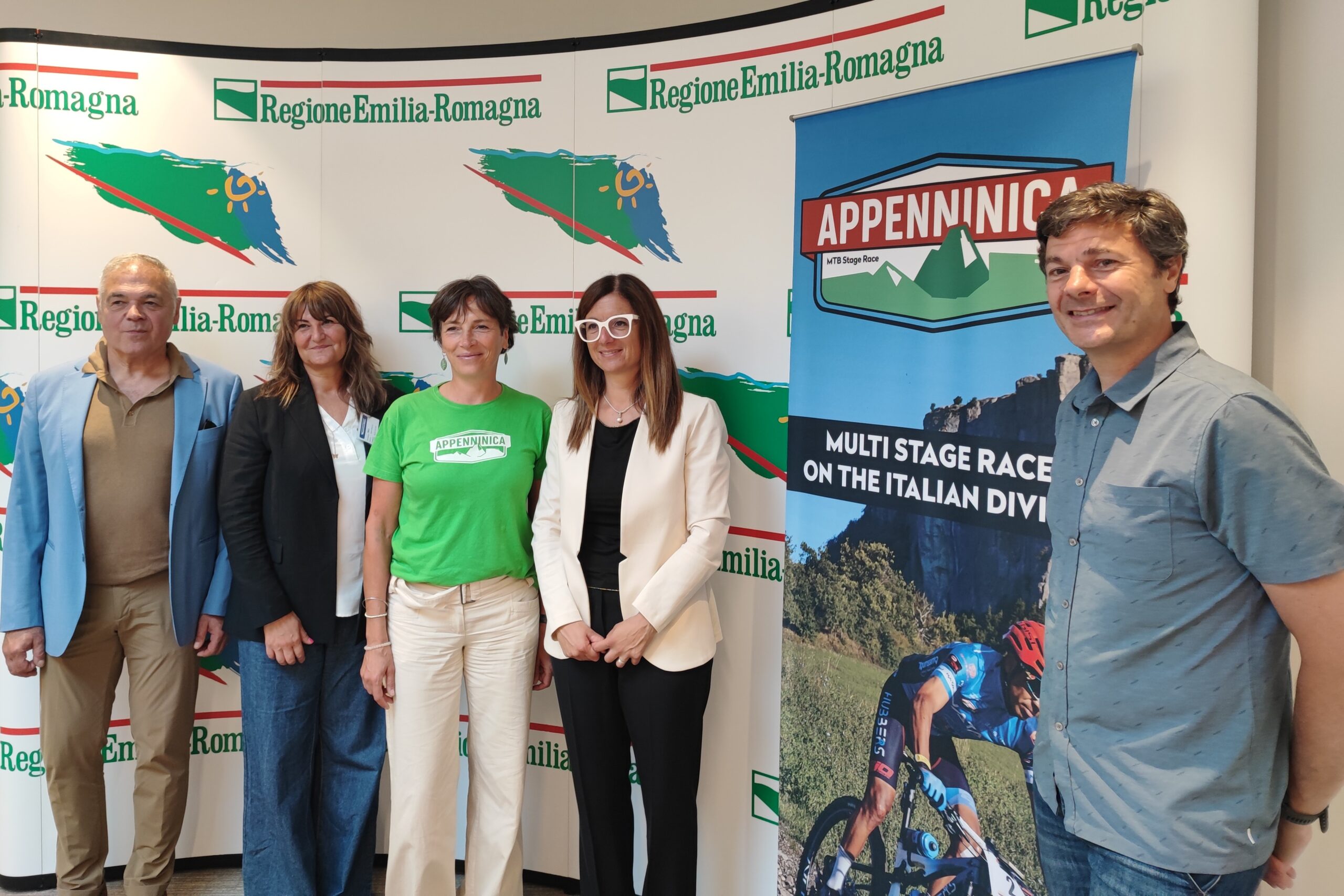
“Appenninica has become a genuine tourism driver for the Emilia-Romagna Apennines, the numbers tell the story. Tour operators are now repackaging the race routes as guided trips, bringing year-round visitors to an area that has struggled with depopulation.” Regional Sports and Tourism Minister Roberta Frisoni made the case at Tuesday’s press conference in Bologna, joined by Lizzano in Belvedere Mayor Barbara Franchi, Castelnovo ne’ Monti Sports Councillor Carlo Boni, and race organizers Milena Bettocchi and Beppe Salerno.
SOLD OUT FOUR MONTHS AHEAD
For the first time in its history, Appenninica sold out its initial 150 spots four months before the start. Organizers responded by expanding capacity to nearly 200 riders – a significant logistical challenge, but one worth taking to accommodate demand.
The international field reflects the race’s growing reputation: 30 countries represented, led by the Netherlands (37 riders), Belgium (25), Italy (23), Spain (15), and Germany (15). First-timers include Estonia, Finland, and Norway, while South American contingents from Brazil, Argentina, Peru, and Colombia remain strong.
FROM SPORTING EVENT TO TOURISM CATALYST
When Appenninica launched in 2019 with around 50 participants, the goal was simple: introduce riders to a spectacular yet underexposed region. Eight years on, that vision is paying off.
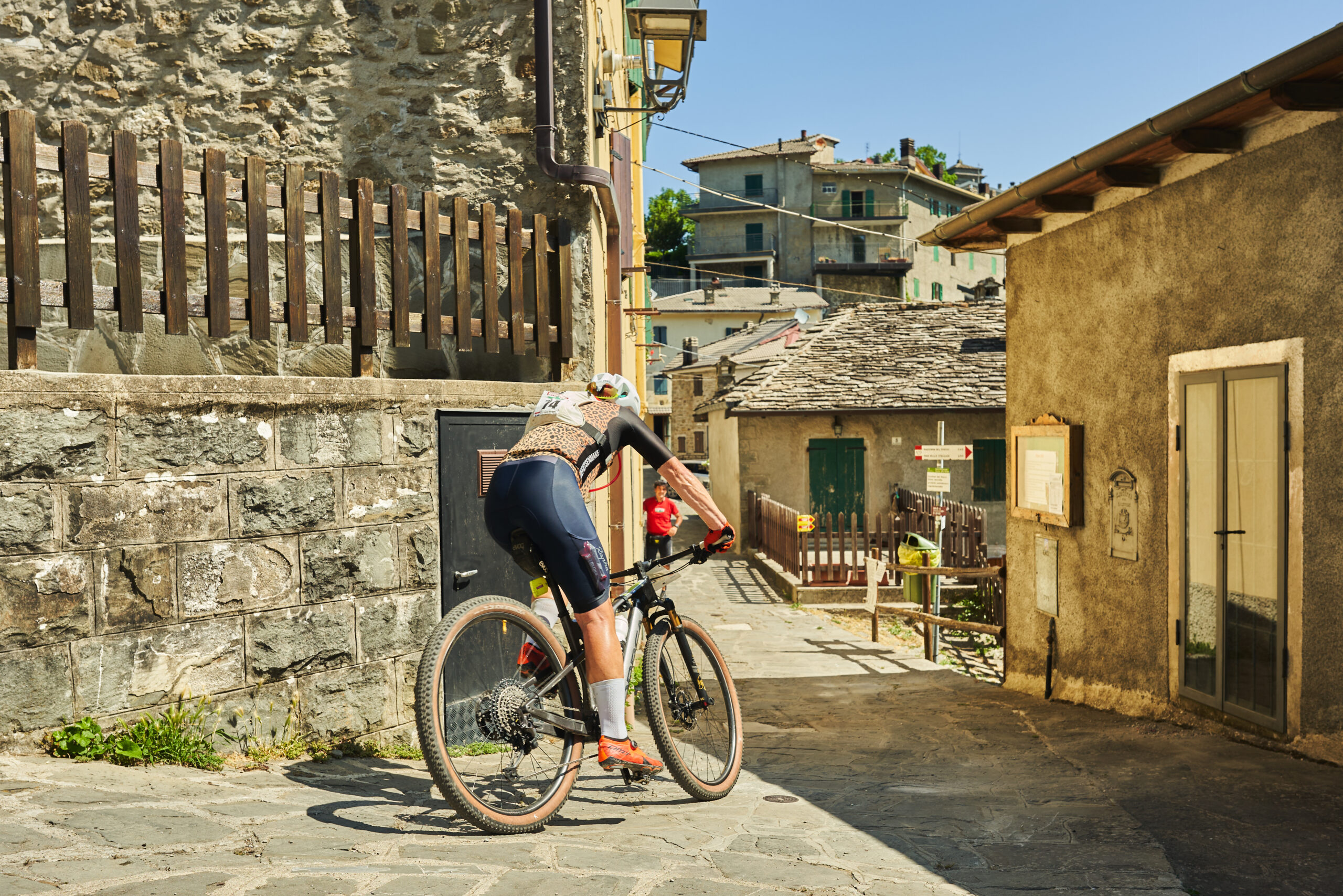
Race footage and rider testimonials circulating globally have caught tour operators‘ attention. Several now offer guided trips along Appenninica routes, creating new revenue streams for local businesses and communities. For a mountain region facing demographic challenges, this represents meaningful economic opportunity.
Dubbed the “Italian Cape Epic”, Appenninica runs as a full-service individual event (unlike its South African counterpart, raced in pairs). The entry fee covers accommodation, meals, feed stations, medical support, bike washing and stage transfers – everything needed to focus on riding.
What keeps riders coming back is the “Appenninica Family” atmosphere. The region’s renowned hospitality creates genuine connections, with many participants returning year after year, and that loyalty is worth more than any marketing campaign.
THE 2026 ROUTE: CORNO ALLE SCALE TO PIETRA DI BISMANTOVA
The race launches on June 22 from Lizzano in Belvedere, beneath Corno alle Scale – the same climb featured in Stage 9 of this year’s Giro d’Italia. Registration and preliminary operations open on Sunday, June 21.
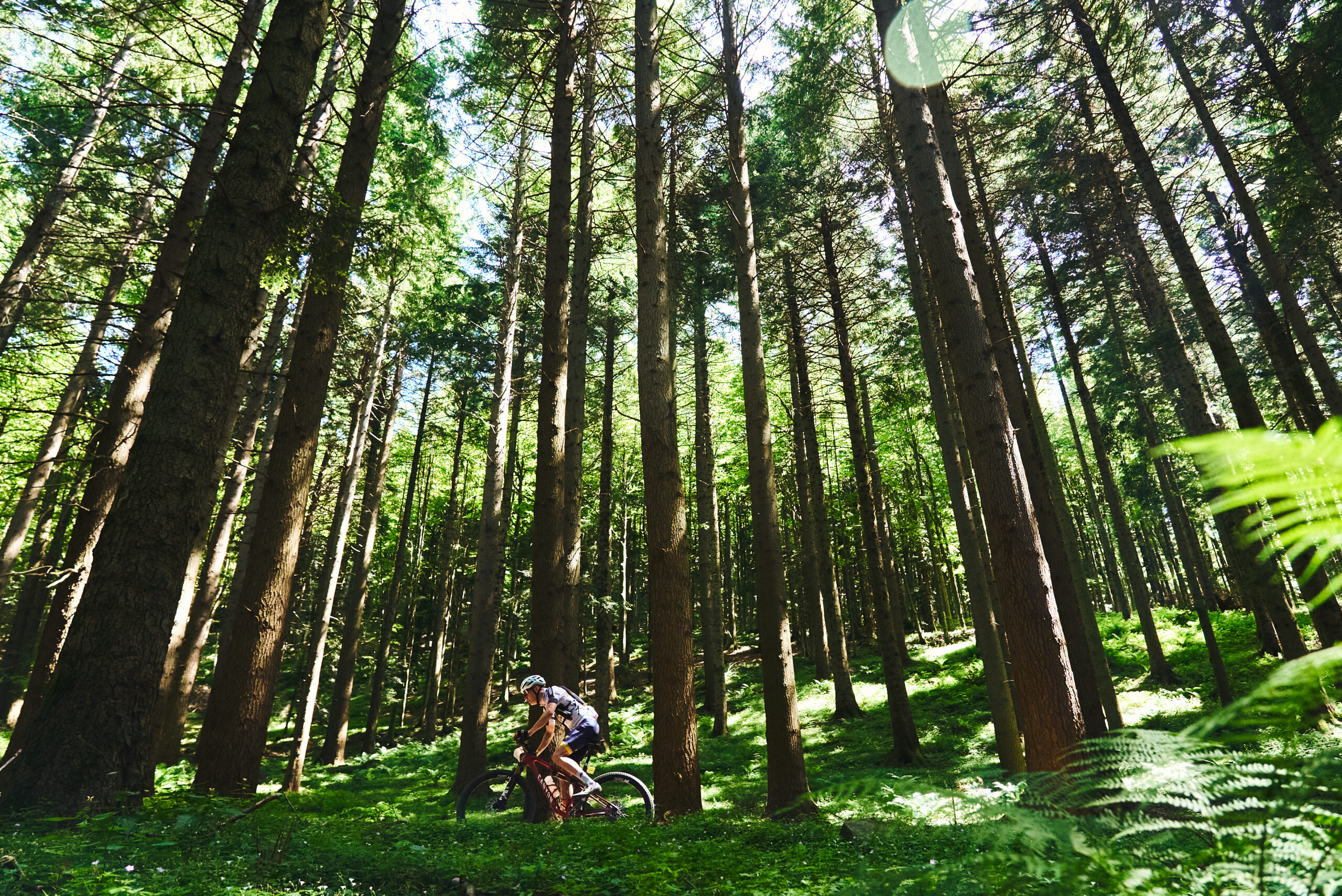
Stage 1 kicks off with a loop around Vidiciatico combining forest roads and singletrack requiring full focus. Fast but already high-altitude, its 48 km and 2,000m elevation gain offer riders a first taste of technical Apennine terrain through beech forests.
On the second day, featuring 65 km and 2,600 m elevation gain, comes the Giro d’Italia tribute stage, the “Corno alle Scale Dressed in Pink”. Riders climb the same route as the pros, continuing to Madonna dell’Acero (3km gravel terrain up to 1,779m asl) for the KOM. After iconic Scaffaiolo Lake comes a technical descent through Fanano, then up Monte Cimone before the long drop to Riolunato.
The midweek stage (40 km and 1,500 m elevation gain) could decide the overall victory. Monte Albano runs along the Tuscany border in stunning scenery. Short but technical, with a tricky final descent into Riolunato: again, no time to relax.
Thursday, June 25 brings the feared Mountain Queen Stage. Passo delle Radici, Giovarello, Lama Lite – hours on forest roads and Apennine trails before the spectacular finale at the Bismantova Rock. Energy management is everything. 88 km and 3,000 m elevation gain will take the peloton from Riolunato to Castelnovo ne’ Monti, host town for the final two stages of Appenninica 2026.
On Friday, June 26, the closing “Windy Way Home” stage tackles the Monte Ventasso routes, which demand full concentration to earn that finisher medal. A 30km climb to Calamone Lake, then technical descending to the Bismantova Rock. 56.5 km and 1,650 m of elevation gain will be the last of this year’s Appenninica.